DIABETES AWARENESS: KNOW THE SIGNS!
This November, our district wellness team is launching a month-long Diabetes Awareness Campaign. While diabetes involves daily medical tracking, our primary goal this month is clear and focused: equipping every member of our staff and student body with the skills to instantly recognize the signs of an active diabetic episode. When a student's blood sugar crashes or spikes, quick recognition by a nearby adult or peer is the single most critical factor in preventing a medical crisis.

Hypoglycemia-(Low Blood Sugar)
Each week, you will receive a short micro-learning email paired with a quick action item or a printable poster to share with your students. This week, we are focusing on Hypoglycemia (Low Blood Sugar). This is the most common acute complication for students living with Type 1 Diabetes. It can happen rapidly, often within minutes, if a student has too much insulin in their system, misses a snack, or burns extra energy during recess or PE.
What to look for (The Physical and Behavioral Signs):
- Shakiness or trembling hands
- Heavy sweating or sudden pale, cold, clammy skin
- Dizziness, headache, or a racing heartbeat
- Sudden behavior changes: irritability, confusion, crying, or stubbornness
- Slurred speech or staggering (can look like intense fatigue or intoxication)
- May report feeling “low,”“funny,” “not themselves," “shaking on the inside,” or “rubbery legs”
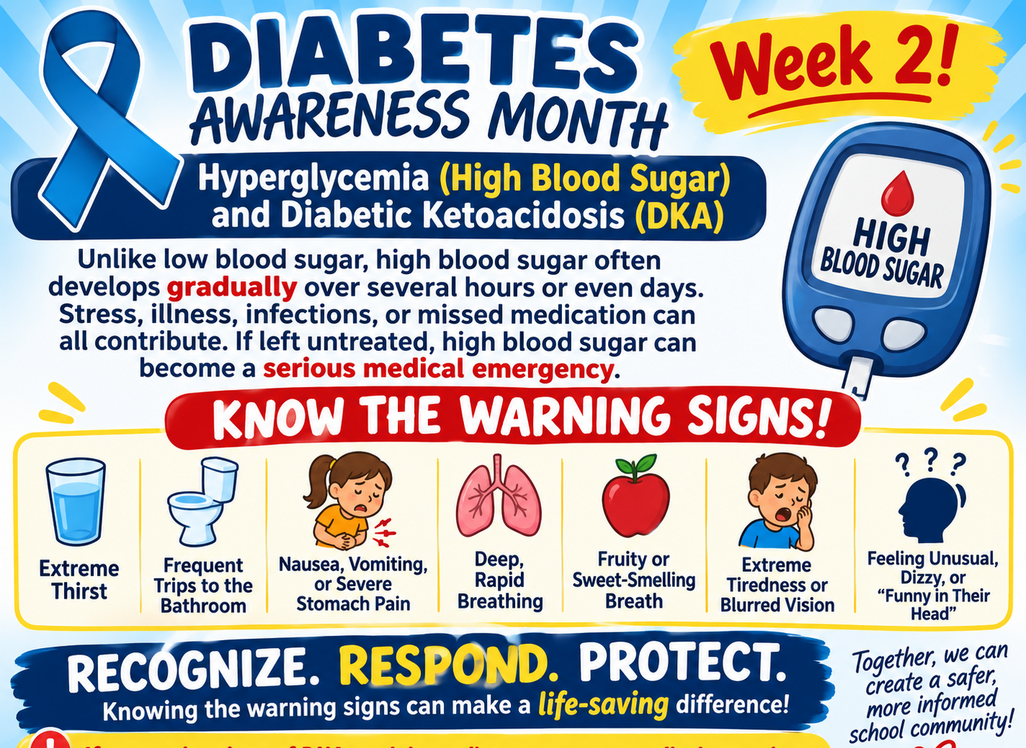
DIABETES AWARENESS MONTH – WEEK 2
This week, we're focusing on Hyperglycemia (High Blood Sugar) and Diabetic Ketoacidosis (DKA). Unlike low blood sugar, high blood sugar often develops gradually over several hours or even days. Stress, illness, infections, or missed medication can all contribute. If left untreated, high blood sugar can become a serious medical emergency.
KNOW THE WARNING SIGNS! Watch for:
- Extreme thirst
- Frequent trips to the bathroom
- Nausea, vomiting, or severe stomach pain
- Deep, rapid breathing
- Fruity or sweet-smelling breath
- Extreme tiredness or blurred vision
- Feeling unusual, dizzy, or “funny in their head”
- RECOGNIZE. RESPOND. PROTECT.
Knowing the warning signs can make a life-saving difference! If you notice signs of DKA, seek immediate emergency medical attention. Early recognition and quick action matter! Together, we can create a safer, more informed school community!

